
Has AGI really arrived? One line sparked a global debate, and we learn how it differs from AI
Following a statement by NVIDIA President and CEO Jensen Huang, the debate surrounding AGI has intensified. There's a significant difference between AI and AGI. Today's AI performs limited tasks, while AGI aims to achieve human-like thinking. Currently, AGI is not yet a full reality.
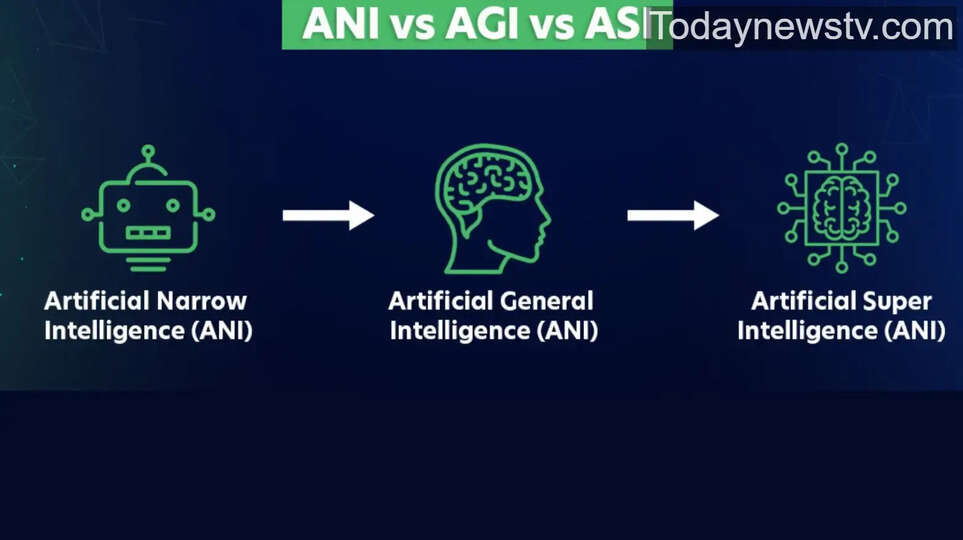
A statement has sparked renewed debate in the world of AI. NVIDIA President and CEO Jensen Huang recently stated that Artificial General Intelligence (AGI) has arrived.
This has sparked questions about whether machines are truly beginning to think like humans.
The distinction between Artificial General Intelligence and current AI has become a major topic of discussion. If you're still unsure about the difference between AI and AGI, this news is for you. Here, we'll explain AGI in detail and explain its differences.
What is AGI?
AGI, or Artificial General Intelligence, is a system that can think, learn, and perform various tasks like humans. It's not limited to a single task but can adapt to new situations.
This means that machines won't just follow instructions but will also make decisions based on understanding. This is why AGI is considered the next and biggest step in AI.
How does today's AI work?
The type of Artificial Intelligence (AI) we use today is called Narrow AI. It's designed for specific tasks, such as voice assistants, chatbots, or recommendation systems.
This system performs well within its intended scope, but when tasked with something different, it becomes weak. This means it lacks the understanding and flexibility of humans.
What is the real difference between AI and AGI?
The biggest difference between AI and AGI lies in their capabilities and thinking patterns. AI is like a specialist, specializing in a single task.
AGI, on the other hand, is like a generalist, capable of understanding a variety of tasks. The goal of AGI is to achieve human-like thinking, decision-making, and learning. This makes it both more advanced and more dangerous.
Why Jensen Huang's statement sparked debate
Jensen Huang stated on the Lex Fridman podcast that AGI may already be achieved. His view was that if an AI system can run a large-scale business, it could be considered AGI.
However, this definition differs from conventional thinking. Consequently, his statement has sparked a new debate among experts and the tech world.
Why are the experts not completely in agreement?
Many leading AI experts, such as Geoffrey Hinton, Yann LeCun, and Yoshua Bengio, believe that AGI is still a long way off.
According to them, AGI means complete human-like intelligence and the ability to perform all kinds of tasks. Meanwhile, Demis Hassabis says this could take five to eight years. This means that there is still no consensus in the scientific community.
There are different opinions about the timeline for AGI.
Estimates vary as to when AGI will arrive. Elon Musk believes it could arrive within a few years, while other experts believe it will take longer. This discrepancy indicates that while technology is advancing rapidly, many challenges remain.
AI or AGI, what's trending now?
Today's AI has become quite powerful and is performing many tasks better than humans. However, there is still a long way to go before reaching AGI.
The real challenge is enabling machines to develop human-like understanding and thinking. We are currently at a point where technology is advancing rapidly, but AGI still lies somewhere between reality and fantasy.