
How does the stock market recover after a crash? This is how long it takes to recover. Check out historical data
If you're panicking about the current steep stock market decline, be patient. History shows that the market has always rebounded strongly after major crises like war or pandemics. Historical data shows that after the initial shock, a spectacular recovery occurs within a few months.
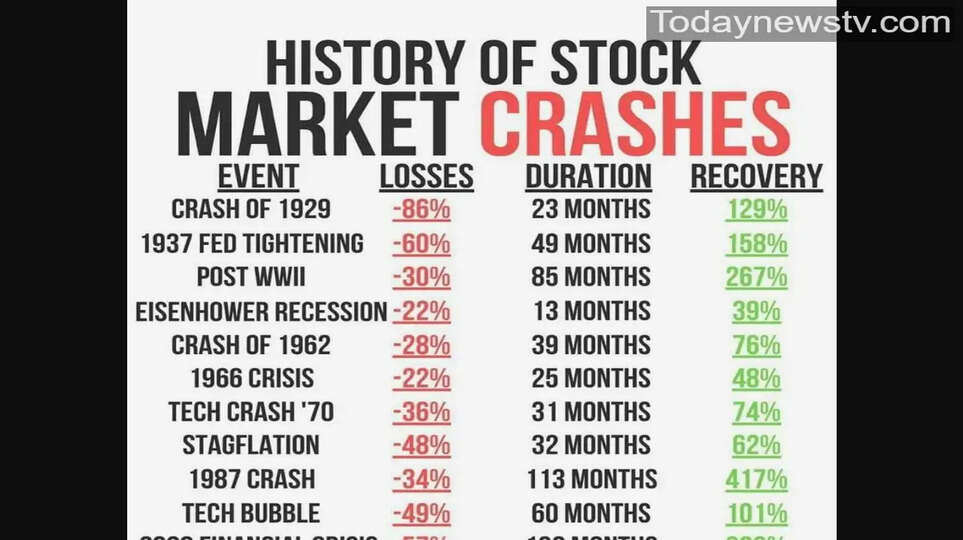
These days, the stock market is completely in the red. The Sensex and Nifty 50 have plunged nearly 14% from their recent peaks. There's an atmosphere of panic everywhere, and investors are worried about the declining value of their portfolios.
Whenever there's a global geopolitical upheaval, such as a war, a major terrorist attack, or a pandemic, the stock market is the first and most immediately affected. But if you're thinking of selling your shares out of fear of this decline, wait.
The picture isn't as dire as it appears. Market history shows that such deep crises are always followed by a strong recovery, and investors who maintain patience during this time reap excellent returns in the future.
Understand market behavior
Renowned investor and founder and CEO of Equity Intelligence India, Porinju Veliyath, shared some interesting statistics on the social media platform X. These statistics illustrate how markets behave immediately after any major crisis.
Whether it's the Gulf War, the 9/11 terrorist attacks on the United States, the Lehman Brothers bankruptcy, or the recent COVID-19 pandemic, each initial period has seen massive selling due to fear and uncertainty.
During these events, the Sensex experienced declines ranging from single digits to over 30 percent. The 2008 Lehman Brothers crisis saw the Sensex fall by nearly 29 percent.
Meanwhile, in early 2020, when the coronavirus pandemic swept the world, the Indian market saw a massive decline of nearly 37 percent within just one month. This is a time when markets are most nervous.
Spring returns as soon as uncertainty clears
History shows that as soon as the initial panic begins to subside, the stock market begins to stabilize and a recovery phase begins.
Average historical data shared by Porinju Veliyath paints a positive picture. The Sensex has seen an average recovery of over 10% just three months after any such major shock.
As time passes, this recovery becomes even stronger. Within six months, the average market return rises to around 17%, and by nine months, it reaches nearly 26%.
The math behind this impressive recovery is simple.
During a sharp downturn, shares of many promising and strong companies become available at very low valuations. As soon as the situation normalizes, investors return to the market to buy these cheap shares, significantly accelerating the recovery.
The same pattern of history
Whether it was the Asian financial crisis, the Kargil War, or the European debt crisis, the market followed the same pattern.
First, there was a significant decline, followed by a gradual recovery. In many cases, the market not only recovered its entire decline but also delivered impressive returns to investors within a few months.
What this means for investors is that making hasty moves during times of geopolitical crisis can be counterproductive.
Those with a long-term perspective should view these sharp declines as an opportunity. This is a good time to add good, strong stocks to your portfolio at bargain prices.