
India's solar power capacity will quadruple in 10 years, halving its dependence on coal
The country's power sector is gradually transforming. Dependence on coal for electricity generation is decreasing. The country's solar energy capacity could increase fourfold in the next 10 years. Wind energy capacity will also triple.
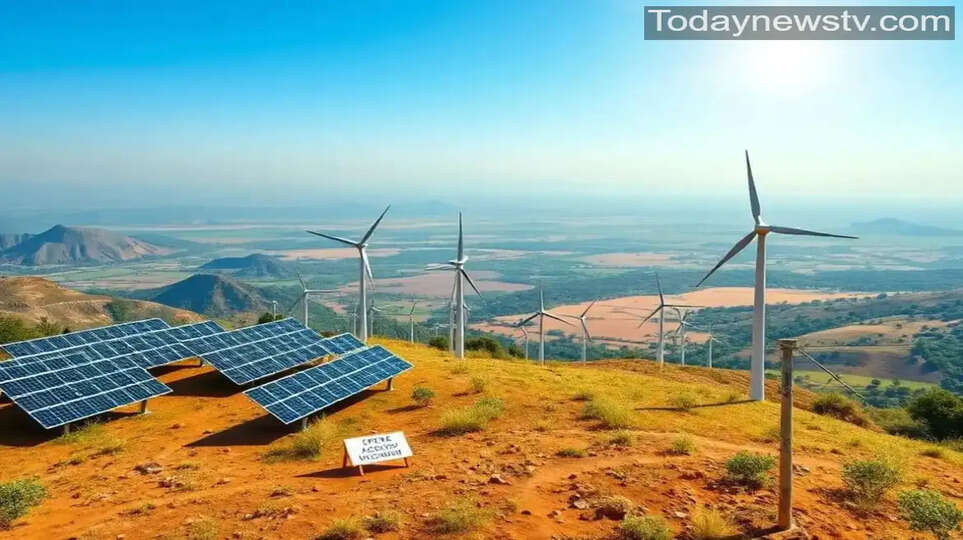
Solar power capacity in India could increase fourfold over the next 10 years, while wind power capacity is expected to triple. This information is provided in a report by a consultant to the Ministry of Power.
According to the report, increasing renewable energy will reduce the dependence on coal for power generation. Currently, it is over 70%, but it could fall to around 49% by 2035-36. These figures are given in a report by the Central Electricity Authority (CEA).
According to the CEA, total power generation capacity from non-fossil fuels (non-coal/non-oil) could reach 786 GW by 2035-36, with solar energy accounting for approximately 65% of this.
Nuclear power capacity will increase three-fold.
During this period, nuclear power capacity could increase three-fold to 22 gigawatts, while the capacity of large hydropower projects could increase by 50% to reach 77 gigawatts.
Furthermore, pumped storage hydropower (generating electricity by storing water) capacity could increase 13-fold to 94 gigawatts.
Battery storage capacity could also increase from the current 0.27 gigawatts to 80 gigawatts by 2035-36.
The country's power sector is changing
This large amount of new capacity is being planned to offset intermittent energy availability,
such as solar and wind, and ensure a consistent power supply. This transformation demonstrates the gradual transformation of India's power sector.
Long-term planning now includes large-scale renewable energy deployments, along with increased focus on storage (batteries, etc.) and custom-generated power systems.